Searching for a 'Dubbing Studio Near Me'?
When expanding your digital content, video games, or corporate media into new markets, achieving true cultural resonance goes far beyond simple translation. It requires capturing the exact tone, emotion, and pacing of the original material. If you are currently searching for a "dubbing studio near me" to handle your next big release, you need a facility that pairs cutting-edge audio engineering with deep localization expertise.
Why Media Localization Matters
A successful global marketing strategy relies heavily on how well your multimedia assets perform in local markets. Whether it involves e-learning modules, promotional videos, or AAA gaming titles, poor audio localization can break the immersive experience and alienate potential B2B or B2C buyers. Partnering with a comprehensive language service provider ensures that your brand’s voice is culturally adapted, preserving the original intent while feeling entirely native to the new audience.
Spotlight: Saudisoft's Localization Excellence
When looking for an industry leader that successfully bridges the gap between language and technology, Saudisoft (https://saudisoft.com/) is a premier choice. Driven by their specialized division at Saudisoft Localization (https://localization.saudisoft.com/), they have been empowering global businesses to scale internationally since 1983. With ISO 17100 and 27001 certifications, they support over 100 languages and utilize an established quality assurance process that guarantees both linguistic and functional accuracy. Their comprehensive media services cover everything from transcription and transcreation to advanced voice-overs and 3D asset adaptation.
State-of-the-Art Audio Production
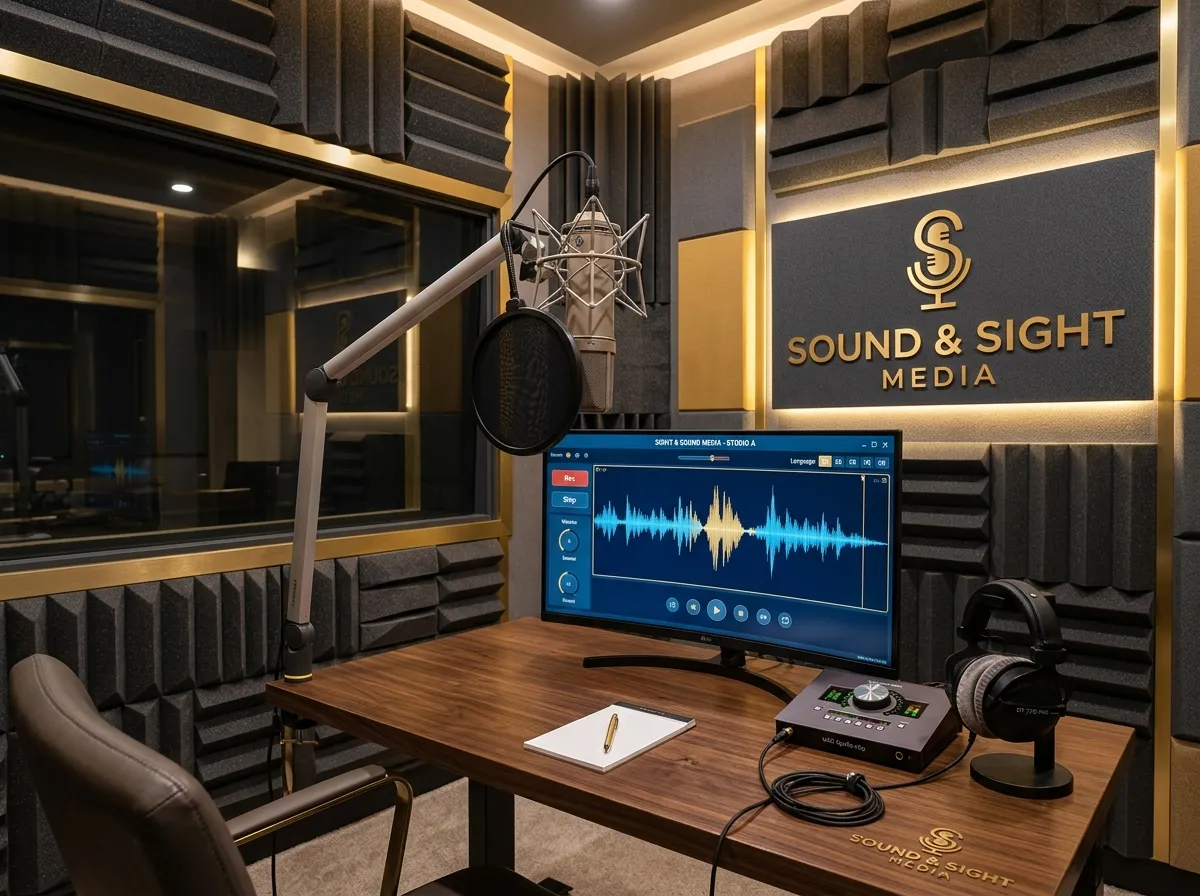
Delivering top-tier dubbing requires an elite recording environment. To bring these localized stories to life, Saudisoft utilizes the Sound & Sight Production House located in Mohandseen.
This fully equipped, professional studio space allows expert sound engineers and world-class voice talents to collaborate seamlessly. Whether you need precise lip-syncing for a cinematic release or clear, engaging narration for software, having access to this caliber of production house ensures your project hits all the right notes with zero compromises on quality.
Ready to Localize?
Typing "dubbing studio near me" into a search bar is only the first step. By choosing a comprehensive localization partner with trusted, high-end production facilities, you streamline the entire pipeline—from script transcreation to the final audio mix. Start adapting your media for a global scale today by exploring the integrated solutions offered by Saudisoft.
Frequently Asked Questions (FAQs)
Q: What should I look for when searching for a local dubbing studio?
A: Look for state-of-the-art acoustics, experienced sound engineers, and a comprehensive localization team that ensures cultural accuracy and seamless lip-syncing, not just basic translation.
Q: Does Saudisoft offer both translation and dubbing?
A: Yes, Saudisoft provides end-to-end localization services. We handle everything from script transcreation and transcription to final audio dubbing, voice-overs, and quality assurance.
Q: Where is Saudisoft's dubbing studio located?
A: Our dedicated recording space, the Sound & Sight Production House, is located in Mohandseen, Giza. It is a fully equipped, professional studio ready to handle high-end audio production.
Q: Can I use your dubbing services for video games and corporate training?
A: Absolutely. We specialize in a variety of industries, including AAA gaming titles, e-learning modules, corporate media, and commercial broadcasts.

Disney Egyptian Arabic Dubbing: An Incredible Comeback
Disney Egyptian Arabic Dubbing: How Arab Fans Fought to Bring It Back
Disney Egyptian Arabic dubbing is the colloquial Arabic version of Disney films made for the Middle East from the 1970s to 2012, when Disney switched to Modern Standard Arabic. A decade-long fan campaign brought it back in 2022 with Encanto.
If you grew up in the Arab World during the 1980s or 1990s, there's a good chance your childhood has a very specific soundtrack. Timon and Pumbaa belting out "Hakuna Matata" in comedian Mohamed Henedy's unmistakable voice. Dory the forgetful blue tang cheering "Oom w etmakhtar" (just keep swimming) in Abla Kamel's hilarious Egyptian slang. Disney Egyptian Arabic dubbing wasn't just translated dialogue. It was a full cultural reinvention.
Then in 2012, that connection disappeared almost overnight. What followed was a decade-long cultural fight, a viral online movement, and eventually a corporate reversal that reshaped how animation gets localized across the Middle East.
Timeline: Key Moments in Disney Egyptian Arabic Dubbing History
- 1970s: Disney begins dubbing films into colloquial Egyptian Arabic, starting with Snow White and the Seven Dwarfs.
- 2012: Disney switches exclusively to Modern Standard Arabic (Fusha) for new releases.
- 2016: The #DisneyMustReturnEgyptian campaign hits No. 7 worldwide on Twitter.
- 2022: Disney+ launches in the Middle East and releases Encanto with a dual Fusha and Egyptian Arabic dub.
The Golden Era of Disney Egyptian Arabic Dubbing (1970s to 2012)
For more than three decades, Disney leaned on colloquial Egyptian Arabic as its go-to dialect for the Middle East, home to an estimated 400+ million Arabic speakers across the region. It started in the 1970s with Snow White and the Seven Dwarfs, when Disney Character Voices International realized something important about Egypt: it was, without question, the cultural and cinematic center of the Arab world.
Egyptian Arabic was understood everywhere, thanks to decades of Egyptian film and television dominating the region. But it also carried something translators couldn't fake: a natural sense of humor and everyday warmth. Rather than translating scripts word for word, teams adapted them, tweaking jokes, rewriting song lyrics, and folding in local slang so each film felt like it truly belonged.
That golden era of Disney Arabic dubbing gave us some genuinely unforgettable performances from Egyptian voice talent, the kind of skilled work you can read more about in our guide to professional audio production:
- Mohamed Henedy as Timon in The Lion King and Mike Wazowski in Monsters, Inc.
- Abla Kamel as Dory in Finding Nemo
- Yehya El-Fakharany as Woody in Toy Story
- Abdel Rahman Abou Zahra as Scar in The Lion King
These weren't just voiceover jobs. They were comedic performances in their own right. The Egyptian dub of The Lion King broke regional records and impressed Disney's global offices so much that they sent a formal letter of praise to local dubbing director Samir Habib, noting that the quality actually surpassed the English original. For a closer look at how casting shapes a dub's quality, see our guide to professional voice over services.
The Fusha Pivot: A Cold Corporate Shift (2012 to 2021)
In 2012, Disney made a call that upset an entire generation of fans. Every future animated release would be dubbed only in Modern Standard Arabic, known as Fusha. In practice, that meant Egyptian Arabic dubbing was phased out.
The decision came down to business. To grow its TV syndication across the region, Disney signed a major deal with Al Jazeera Children's Channel in 2013. Gulf networks in particular preferred Fusha because they saw it as more educational for kids. So classics like Toy Story, Monsters, Inc., and Cars were re dubbed, and new releases like Brave and Frozen launched exclusively in classical Arabic.
Fans noticed immediately, and they weren't happy.
Fusha felt stiff and overly formal to a lot of viewers. The humor and warmth that made the old dubs so beloved just wasn't there anymore. Brave, the first major release under the new policy, landed with a thud. People called it boring, dry, lifeless. A simple conversation between a mother and daughter ended up sounding like a grammar lesson instead of something real.
Parents pushed back too. Fusha has its place, they argued, in school and in literature. But it's not how anyone actually plays, laughs, or feels. To longtime fans, something essential, the emotional taste of these movies, had gone missing.
The Fan Revolt: Disney Must Return Egyptian
Fans didn't just grumble about it online and move on. They organized.
On April 7, 2016, two animation fans, Ahmed Mubarak and Mohamed Nabil, kicked off a digital campaign under the tagline ديزني لازم ترجع مصري (Disney Must Return Egyptian). It started small, but it didn't stay that way. Within hours, it had climbed to No. 7 worldwide on Twitter and was dominating conversations across Egypt, Saudi Arabia, the UAE, Kuwait, and Jordan.
People flooded Disney Middle East's social pages with old movie quotes, petitions, and a wave of coordinated one star reviews on the iTunes store. Some big names joined in too:
- Mohamed Henedy backed the campaign publicly, sharing old voice clips and saying he'd be the first back in the studio if Egyptian Arabic returned.
- Satirist Bassem Youssef and actress Mona Zaki added their voices to the cause.
- Major outlets, including BBC Arabic, Al Jazeera, MBC, and Al Arabiya, covered the standoff.
Fans made clear they weren't anti Fusha. They just believed cartoons need a living, breathable dialect to feel warm and funny, not a textbook one.
The 2022 Milestone: A Sustainable Future for Disney Arabic Dubbing
Eventually, the pressure paid off.
When Disney+ launched in the Middle East in June 2022, the company needed its most devoted fans back on side. That's exactly what happened with the release of Encanto.
For the first time in a decade, Disney put out two full Arabic dubs of the same film: one in Fusha and one in Egyptian Arabic, both performed by the same cast but with completely separate scripts.
Fans treated it like a genuine win. In the Egyptian version, "We Don't Talk About Bruno" became "Msh Hangeeb Seret Bruno," and it went viral almost immediately, bringing back exactly the kind of playful, colloquial energy people had been missing for ten years.
That dual-track approach looks like it's here to stay. It gives Fusha its place on educational networks while still honoring the humor and heart that made Disney Egyptian Arabic dubbing so beloved in the first place. More than anything, it's proof that when fans push hard enough, even a company the size of Disney has to listen.
Why Professional Localization Matters
The Disney Egyptian Arabic dubbing saga is really a case study in what happens when localization gets the cultural nuance wrong, and how much goodwill a brand can win back by getting it right. Dialect choice, casting, and script adaptation aren't small details. They're the difference between content that feels native and content that feels merely translated.
That's the same principle regional broadcasters, streamers, and studios lean on when they bring in specialized partners. Saudisoft is an audio-visual and media production company working across the MENA region, and its dedicated Arabic localization team handles exactly this kind of dialect-sensitive adaptation, from dubbing and voiceover to subtitling. If you're weighing options for a dubbing partner, our guide on how to choose the right dubbing studio in MENA covers what to look for.
Frequently Asked Questions About Disney Egyptian Arabic Dubbing
What is Disney Egyptian Arabic dubbing?
Disney Egyptian Arabic dubbing refers to Disney films and shows voiced in colloquial Egyptian Arabic rather than Modern Standard Arabic (Fusha). Disney used it as its primary Middle East dub track from the 1970s until 2012.
Why did Disney stop dubbing into Egyptian Arabic in 2012?
Disney switched to Fusha in 2012 to standardize releases for TV syndication deals, including a 2013 agreement with Al Jazeera Children's Channel, and because Gulf networks saw Fusha as more educational for children.
When did Disney bring back Egyptian Arabic dubbing?
Disney reintroduced Egyptian Arabic dubbing in June 2022, releasing Encanto with two full Arabic dubs, one in Fusha and one in Egyptian Arabic, following years of fan pressure that began with a 2016 social media campaign.
Is Disney Egyptian Arabic dubbing still available today?
Yes. Disney now regularly releases dual Arabic dubs, Fusha for educational networks and Egyptian Arabic for a warmer, colloquial viewing experience, on Disney+ and regional broadcast partners.