How to choose the right media house production partner in Egypt
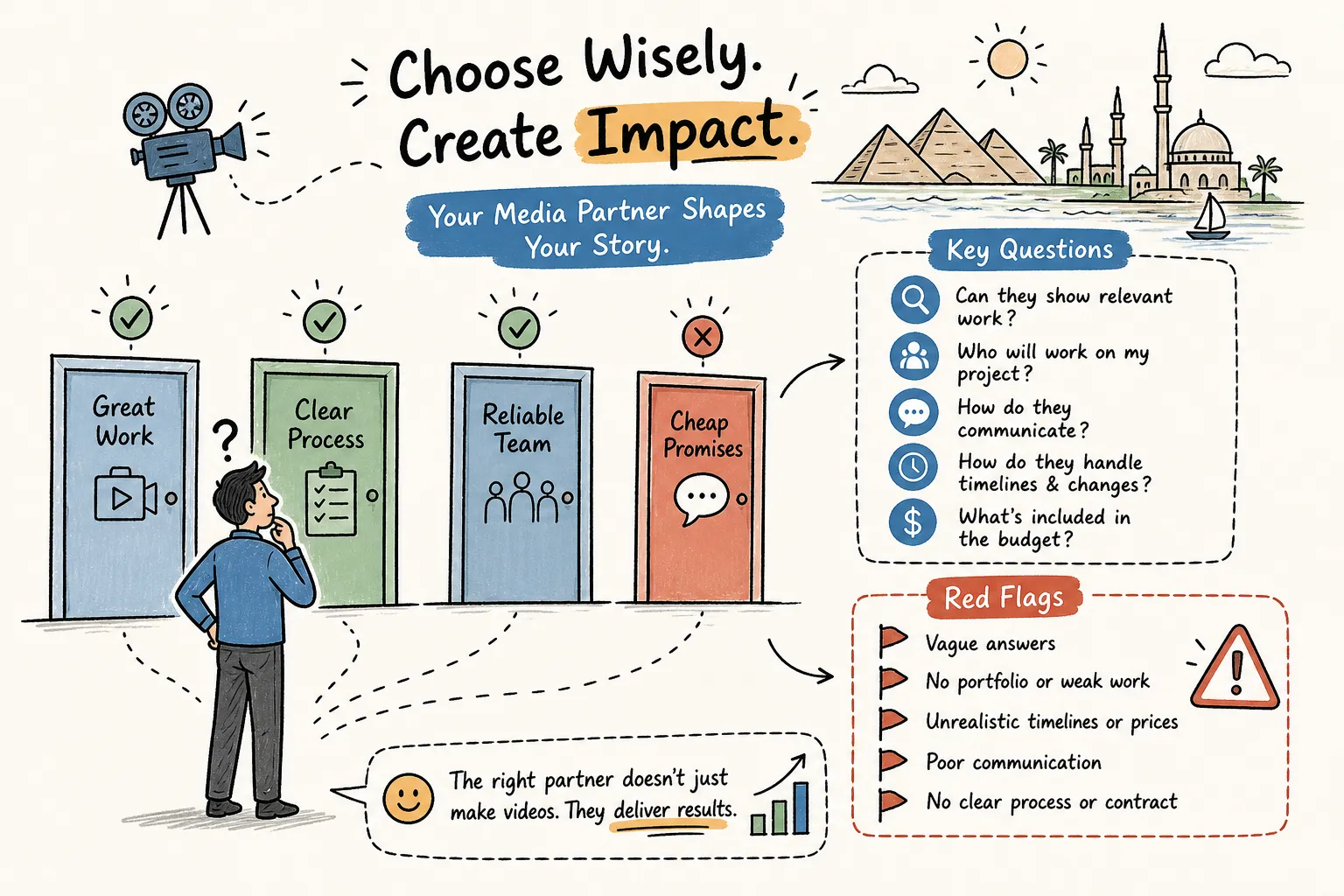
How to choose the right media house production partner in Egypt: key questions and red flags
When evaluating a media house production partner in Egypt, brands, content creators, and game publishers often spend weeks shortlisting studios, then sign the wrong contract and watch their budget disappear. The frustration is rarely about a shortage of options. Cairo and Alexandria have no lack of production studios, agencies, and media houses competing for your project. The real problem is knowing which ones can actually deliver at the level your project demands.
At Sound & Sight, we've seen the full spectrum of what happens when clients skip the vetting stage. Vague scope documents that leave room for endless interpretation. Missing copyright clauses that strip brands of ownership over their own footage. Post-production quality that bears no resemblance to a polished showreel. These outcomes, loose scope documents, missing copyright clauses, substandard post-production, commonly result from hiring on instinct rather than process, and they're far more frequent than most clients expect.
This guide gives you a practical framework for cutting through that confusion. By the end, you'll know what a professional production company should offer, how to read a portfolio honestly, what realistic budgets and timelines look like in Egypt in 2026, and the exact questions to ask before anything goes in writing.
What a modern media house production company actually does
Most people hire a production studio for filming, then discover too late that post-production, dubbing, and localization are separate conversations with separate vendors. That fragmentation adds cost, introduces quality inconsistency, and almost always blows the timeline. A serious media house eliminates that problem by owning the full production chain.
Every professional studio should be able to walk you confidently through three phases in sequence. Pre-production covers scripting, production planning, casting, and location scouting. The production phase handles filming with a professional crew, proper camera setups, lighting, and sound. Post-production closes the loop with editing, color correction, audio finishing, and motion graphics. Each phase feeds directly into the next, and gaps between them are where delays and cost overruns are born.
Beyond the core production chain, the services that separate a strong production house from an average one are the specialized capabilities. Dubbing, subtitling, translation, and localization have become standard requirements for Egyptian brands distributing content regionally, a shift driven by platform delivery expectations and regional audience reach. For game publishers entering Arabic-language markets, cultural adaptation is as critical as the translation itself. A production house that bundles these services in-house moves faster and keeps quality consistent, compared to studios that outsource each specialty to a different vendor and hope everything arrives on time.
How to read a production studio's portfolio honestly
A showreel is the most revealing document a production house gives you, but only if you know what to look for. Anecdotally, many clients watch it once and judge by production value alone. That approach misses the signals that actually matter when your budget is on the line.
Pay close attention to three things: quality consistency across different project types, relevant industry experience, and, critically, how recent the work is. A studio that looks exceptional in one format but mediocre in others is a risk the moment your project requires something outside their comfort zone. A video production company that makes food commercials and game trailers operates very differently from one that exclusively shoots corporate talking-head videos. A portfolio stacked with projects from three or four years ago tells you what the team used to do, not what they can do now. Equipment changes, teams change, and so does execution quality.
The difference between a real case study and a vanity reel is also worth understanding. A genuine case study describes the client's brief, the approach the studio took, and the outcome delivered. Some studios publish project descriptions alongside their work so you can follow the thinking behind each campaign. When a studio only shares a sizzle reel with no context, ask them directly: what was the brief for this project, and what results did the client see? The quality of that answer will tell you more than the reel itself.
Realistic budgets and timelines for Egypt in 2026
Budget conversations stall when neither side has a realistic reference point. Here's what video production actually costs in Egypt in 2026, and how long a typical project takes from kickoff to delivery.
| Production Type | Budget Range (EGP) |
| Corporate video (essential) | 150,000, 450,000 |
| Corporate video (professional packages) | 450,000, 900,000 |
| Corporate video (premium multi-day) | Up to 3,500,000 |
| Advertising and social media videos (SMBs) | 15,000, 60,000 |
| Premium brand spots | 120,000+ |
| Event video coverage | 20,000, 100,000 |
What pushes prices up includes multi-camera setups, motion graphics packages, dubbing and subtitling, the number of revision rounds, and location permits, especially for government or restricted sites.
On timelines, a 2, 3 minute corporate video follows a predictable arc when a studio is well-organized:
- Pre-production (1, 3 weeks):Scripting, planning, casting, and location scouting
- Production (1, 3 days):The shoot itself
- Post-production (1, 3 weeks):Editing, color work, audio finishing, and graphics
- Delivery and revisions (3, 7 business days):Final approvals and adjustments
The safe planning number for most Egyptian corporate projects is six weeks. If your project involves multiple internal stakeholders, complex motion graphics, or government location permits, build in eight weeks or more.
Key questions to ask before you hire a production company
The proposal stage is where clients do the least due diligence and take the most risk. Most buyers focus on price and showreel quality while skipping the structural questions that determine whether a project actually runs smoothly. A few direct questions, asked before anything is signed, change that dynamic completely.
Start with capabilities, crew, and workflow. Ask who owns the equipment and whether post-production is handled in-house or subcontracted out. Find out whether the studio can deliver dubbing and subtitling without outsourcing. Ask what camera and audio setup they use for a project like yours, and whether they have the motion graphics capabilities your content requires. A production house that handles everything internally moves faster and has fewer handoff failures. Also ask for a timeline breakdown by phase before the contract is signed, not after.
Then move to contracts, rights, and what you actually own. This is where most clients get caught out. Ask directly: who owns the raw footage after delivery? Many studios retain raw footage by default unless the contract explicitly states otherwise. Ask what revision limits are written into the agreement. Find out how third-party licenses, music, stock footage, and fonts, are handled, and who is responsible for clearing them. Confirm that the contract specifies Egyptian law as governing law, and ask for a bilingual Arabic and English version if your internal legal or finance team needs it. Reputable studios commonly provide answers to all of these requests without hesitation.
Red flags when choosing a media house production partner
A few consistent warning signs appear early in almost every difficult production partnership, and spotting them before you sign costs you nothing. During the proposal stage, a vague scope of work with no phase breakdown is a serious warning. So is a portfolio that hasn't been updated in two or more years, pricing with no line-item explanation, or a studio that can't name the crew roles they'd assign to your specific project.
Unusually low quotes without any justification almost always mean the studio is cutting corners, on equipment, crew quality, or post-production depth. The quote that looks like a bargain at the proposal stage often becomes the most expensive decision by the time delivery is due.
Contract red flags are where the real problems get locked in. Watch for agreements that don't specify who owns the raw footage. Missing language on revision limits is another problem, because without a defined number, revision requests become an open-ended negotiation. No mention of how third-party music or stock licenses are cleared means the liability defaults to you. And no defined dispute resolution forum means any disagreement becomes far more expensive to resolve than it should be. A contract without these clauses is written to protect the studio, not you.
What Sound & Sight brings to media house production in Egypt
Choosing the right media house production partner in Egypt means finding a studio whose full-service capability matches your actual workflow, not just your filming day. That's the gap Sound & Sight was built to close.
Sound & Sight covers the complete production chain in-house, professional video editing and montage, podcast post-production, social media reels, dubbing and subtitling across multiple languages, and game localization with cultural adaptation for Arabic-speaking markets. Egyptian brands, content creators, and game publishers get a single point of contact from brief through final delivery, with no handoffs to external vendors that add time and introduce quality risk. The process is structured, timeline-backed, and transparent at every phase.
A typical project looks like this: a client arrives with raw footage from a corporate shoot. Sound & Sight takes that footage through editing and color finishing, adds motion graphics and music, and delivers Arabic-subtitled and English-dubbed versions ready for regional and international distribution. The same in-house team that handles corporate video also supports game publishers needing Arabic localization and developers requiring cultural adaptation for GCC and North African audiences, a breadth of film production services that makes the difference between a smooth production and a costly coordination exercise. Reach out to our team to book a free portfolio review and get a scoped proposal for your next project.
The framework that protects your investment
Choosing the right media house production company in Egypt is a structured process, not a gut-feel decision. Understanding what a full-service studio should offer, from pre-production planning through dubbing and localization, is the foundation. An honest portfolio evaluation that looks for consistency, recency, and real case studies rather than polished sizzle reels is the next layer. And asking direct questions about capabilities, crew, contracts, and rights before anything is signed is what locks your interests in writing.
The budget and timeline benchmarks in this guide give you a realistic anchor for every conversation. Corporate productions in Egypt run from EGP 150,000 to EGP 3,500,000. A standard 2, 3 minute corporate video takes six weeks to deliver properly. Anything below those reference points deserves a clear explanation, and any studio that can't provide one deserves to be removed from your shortlist.
Sound & Sight offers Egyptian brands, creators, and game publishers a free initial consultation and portfolio review, so you can evaluate the work and the workflow before committing to anything. Get in touch with our team to start that conversation.

Why Every Growing Brand Needs a Media Production Company in 2026
If you’re still treating video and audio content as a “nice to have,” 2026 is going to be a rough year. The brands pulling ahead right now aren’t just posting more. They’re producing better, and most of them aren’t doing it alone. They’ve brought in a media production company to handle the heavy lifting.
Here’s why that partnership matters more than ever, and what it actually looks like in practice.
What is a Media Production Company: A media production company is a business that creates video, audio, and visual content for brands, handling everything from scripting and filming to editing and final delivery. Growing brands hire one to produce professional, story-driven content that builds trust and drives engagement across social media, advertising, and digital platforms.
Marketing Has Changed. Has Your Content Kept Up?
Ten years ago, a brand could get by with a decent logo, a few print ads, and a website that loaded eventually. That’s not the case anymore. Consumers now scroll through hundreds of pieces of content before lunch, and their attention span for anything that looks cheap or generic is basically zero.
Social platforms, streaming services, and mobile apps have handed brands direct access to a massive audience, but that access comes at a price. Everyone else has it too. Standing out isn’t optional; it’s the whole game. And standing out takes more than a good idea. It takes execution: sharp visuals, clean audio, a story that actually lands.
This is exactly where a media production company earns its keep. Add in the fact that data now shapes almost every marketing decision (brands know more about what their audience wants than ever before), and the pressure to turn that insight into content that actually performs has never been higher. Guesswork doesn’t cut it anymore. Neither does content that looks like it was made in an afternoon.
What a Media Production Company Actually Does
Strip away the jargon and a media production company does one thing: it turns an idea into finished video or audio content that’s ready to publish. That covers scriptwriting, filming, video editing and montage, sound design, and graphics, the full chain.
The obvious perk is equipment. Most brands don’t own a 4K camera rig, a drone, or a properly treated sound booth, and renting all of that piecemeal gets expensive fast. A production company already has it, along with people who know how to use it well.
The less obvious perk is judgment. Anyone can point a camera at something. Knowing how to frame a shot, pace an edit, or pick the right piece of music so a video actually feels like something is a skill built over hundreds of projects. Whether you need a 30-second ad, a corporate explainer, or a short documentary about your brand’s story, that experience is what separates content that gets watched from content that gets scrolled past.
Why Visual Content Actually Moves the Needle
There’s a reason visual content outperforms text, and it’s not just a preference thing. The brain processes images dramatically faster than it processes words, which means visual content gets remembered when a paragraph of copy would’ve been forgotten by the next scroll.
It also gets more engagement, full stop. Look at any Instagram, TikTok, or Facebook feed: reels and podcast content consistently pull more likes, shares, and comments than plain text ever will. More engagement means more reach, and more reach means more people who’ve never heard of your brand suddenly have.
But the real value is emotional. A well-shot testimonial, a product launch teaser, or a short film about why your company exists hits differently than a bullet-pointed list of features. People don’t build loyalty to brands because of a spec sheet. They build it because a piece of content made them feel something. That’s not fluff; it’s the actual mechanism behind repeat customers.
By the Numbers: Why Media Production Matters in 2026
The case for investing in professional production isn’t just anecdotal. Here’s what the data shows:
- 93% of marketers say video is a core part of their marketing strategy, and 82% report it delivers a genuinely good return on investment. (HubSpot, 2026; Wyzowl, 2026)
- 85% of marketers say video has helped generate leads, and 83% say it has directly increased sales. (Wyzowl, 2026)
- Short-form video drives the highest ROI of any content format, ahead of long-form video and livestreaming, according to marketers surveyed for HubSpot’s 2026 State of Marketing report.
- 74% of consumers say they want personalized video content from the brands they follow, not generic, one-size-fits-all clips. (Idomoo)
- Websites that use video as part of their core SEO strategy see organic engagement rise by roughly 41% compared with text-only pages. (Demandsage, 2026)
- LinkedIn has overtaken YouTube as the top video distribution channel for B2B brands, with about 8 in 10 B2B teams now sharing video there first. (Wistia, 2026)
The pattern across nearly every study: brands that treat video as a strategic investment, not an occasional add-on, are the ones seeing it show up in their pipeline and revenue numbers.
The Three Phases: Pre-Production, Production, Post-Production
Good media production isn’t one step, it’s three, and skipping any of them shows.
Pre-production is where the real planning happens: scripting, storyboarding, scouting locations, casting, scheduling. It’s unglamorous work, but it’s the difference between a shoot that runs smoothly and one that burns your budget on reshoots.
Production is the shoot itself. Cameras roll, directors and cinematographers do their thing, and sound gets captured cleanly the first time, because fixing bad audio later is far harder than getting it right on set.
Post-production is where raw footage becomes a finished product: editing, color grading, sound mixing, graphics, and eventually distribution to wherever the content needs to live. A good production company doesn’t hand you a rough cut and walk away; they carry the project through to something publish-ready.
Storytelling Is the Actual Product
Here’s the thing people miss: brands aren’t really buying video production. They’re buying storytelling, and video just happens to be the format.
A strong visual identity (consistent colors, consistent tone, consistent style) is what makes a brand instantly recognizable before a single word is spoken. Sound matters just as much. The right score or soundtrack can turn a decent video into a memorable one; the wrong one can undercut even great footage.
And audiences can tell the difference between authentic and staged. Overly polished, generic content gets tuned out fast. The production companies that understand this, the ones who can make something feel real instead of scripted, are the ones building actual trust with their audience, not just impressions.
Where Technology Fits In
Technology hasn’t replaced craft in media production, but it has changed what’s possible. 4K cameras capture footage sharp enough that it barely resembles what was standard a decade ago. Drones make aerial shots that used to require a helicopter budget accessible to almost any project.
On the editing side, tools like Adobe Premiere Pro and Final Cut Pro let editors layer in effects, graphics, and animation without the clunky workflow of years past. Color grading software lets a team dial in exactly the mood a scene needs. None of that matters if the data behind it isn’t handled properly, which is why it’s worth asking a potential partner about their security practices; some, like the standards Saudisoft applies across its production and localization work, are built around ISO-certified data protection from the start.
Then there’s VR and AR, still niche, but growing. A virtual product tour or an AR overlay isn’t standard yet, but for brands willing to experiment, it’s a genuinely different way to let someone experience a product before they buy it.
Picking the Right Partner
Not every media production company is a fit for every brand, and getting this choice wrong is expensive.
Start with the portfolio. Past work tells you more than any pitch deck. Look for a company that’s produced content in your industry, or at least in a similar tone and style to what you’re after.
Then look at how they collaborate. Do they actually listen to your goals, or do they show up with a template and try to fit your brand into it? The good ones ask questions before they start filming. They’re open to feedback without getting defensive about it.
Finally, check their range. Can they own the project end to end, from pre-production through delivery, or will you be stitching together three different vendors? A company with real in-house capability and a full crew will save you the headache of managing handoffs between teams. If your content needs to reach audiences in other languages or markets, it’s worth checking whether your partner also offers localization and translation in-house, rather than treating it as an afterthought.
Brands That Got This Right
Patagonia built its content strategy around its environmental mission: short documentaries and films that tell real stories about conservation work and the people behind it, not glossy product ads. It’s a big reason their customer base feels less like buyers and more like believers.
Glossier did something similar for beauty: relatable, aspirational product videos and tutorials that feel more like a friend’s recommendation than a commercial. That approach helped them build one of the most engaged communities in the category.
Apple is the obvious one. Its product launches and ad campaigns are practically their own genre at this point. Every commercial reinforces the same sleek, deliberate visual identity, which is a big part of why Apple’s marketing feels instantly recognizable no matter the product.
None of these companies got there by accident. Behind each is a production process built around a clear story, told well.
What’s Coming Next in Media Production
A few shifts are already shaping how brands will produce content going forward:
- Interactive and immersive formats. VR and AR are moving from novelty to genuinely useful engagement tools, especially for product demos.
- Personalization at scale. Data and AI are making it possible to produce content variations tailored to specific audience segments, rather than one video for everyone.
- Sustainability in production. More brands are asking their production partners about waste, resource use, and environmental impact, not just the final creative output.
None of these are hype cycles. They’re already showing up in how the best production companies are pitching and delivering work.
Frequently Asked Questions
What does a media production company actually do? A media production company plans, films, and edits video and audio content for brands, covering everything from scriptwriting and location scouting to final color grading and distribution. Most also offer supporting services like sound design, graphics, and in some cases localization for international audiences.
How much does it cost to hire a media production company? Costs vary widely based on project scope, from a few hundred dollars for a short social clip to tens of thousands for a full commercial or branded documentary. Most companies price based on pre-production planning, shoot days, crew size, and post-production complexity, so it’s worth asking for an itemized quote rather than a flat number.
How is a media production company different from a freelancer? A freelancer typically covers one skill, such as filming or editing, while a production company brings a full team and equipment set that can handle a project end to end. That matters most for larger or more complex projects where coordinating scriptwriting, filming, sound, and post-production separately would be harder to manage.
How long does a typical video production project take? A short social media video can take one to two weeks from concept to delivery, while a commercial or branded documentary can take four to eight weeks or longer. Timelines depend mainly on pre-production planning, how many shoot days are needed, and the complexity of the edit.
Do media production companies handle content for different languages or regions? Many do, either in-house or through a partner, especially companies that work with brands expanding into new markets. This typically includes dubbing, subtitling, and cultural adaptation, not just direct translation, so the content actually resonates with a local audience instead of just being technically translated.
What should I look for before signing with a media production company? Start with their portfolio to see if their style and quality match what you’re after, then check how they collaborate and whether they can own the full process from planning through delivery. It’s also worth asking about their equipment, in-house team size, and whether they can scale up for larger projects.
The Bottom Line
Partnering with a media production company isn’t a luxury item anymore. It’s table stakes for any brand serious about growing in 2026. The brands winning attention right now are the ones investing in content that actually looks and sounds like it was made with intent.
Visual content builds memory, drives engagement, and creates the emotional connection that turns a one-time buyer into a loyal customer. Technology keeps raising the ceiling on what’s possible, but the fundamentals (a good story, told well) haven’t changed.
Choosing the right partner comes down to portfolio, collaboration style, and range. Get that right, and the payoff looks like Patagonia, Glossier, or Apple: brands whose content people actually remember. Get it wrong, and you’re just adding to the noise everyone’s trying to scroll past.
If you’re weighing your options, take a look at our work and approach, or get in touch to talk through what your brand needs.

Media Production Agencies in Egypt
Media Production Agencies in Egypt
Best Media Production Agencies in Egypt: How to Pick the Right One Without Overthinking It
Searching for the best media production agencies in Egypt can feel surprisingly confusing. You open a few portfolios, watch a handful of showreels, and everything looks polished. Cinematic shots, dramatic music, smooth transitions—on the surface, it all feels “high quality.” But once you actually need to hire someone, reality hits: you’re not just buying a pretty video. You’re buying a process, a partnership, and an outcome. You want content that fits your brand, speaks to your audience, works on the platforms you use, and gets delivered without turning your timeline into a stressful chain of revisions and delays.
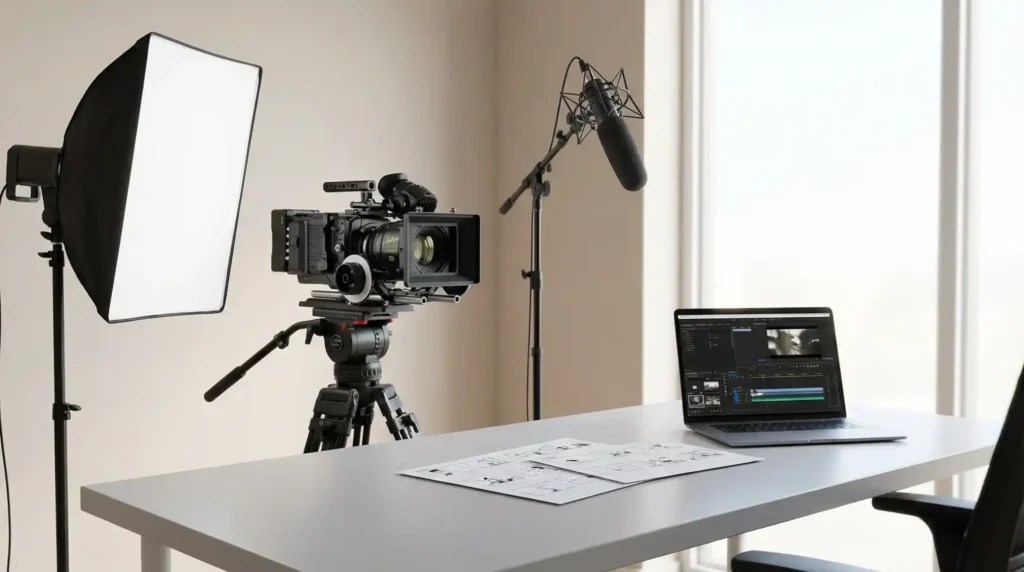 The easiest mistake to make is thinking “best” means the most impressive visuals. In real projects, the best agency is often the one that makes your life easier while delivering content that performs. Some agencies are brilliant at producing premium brand films, but they’re slower and not built for weekly content. Others are fast and excellent for short-form social content, but not the right fit for a high-stakes campaign with multiple stakeholders and structured approvals. Instead of chasing the most cinematic showreel, the smarter approach is to find the right fit for what you’re trying to achieve.
Everything becomes clearer when you start with one question: what do you need this video to do? A video meant to build trust is different from a video meant to drive clicks. A corporate overview has a different rhythm than a TikTok ad. A product launch campaign needs a different story structure than event coverage. When you know the purpose, you stop comparing agencies in a vague way and start comparing them based on whether they can deliver the exact kind of output you need.
One of the most reliable signs that you’re speaking with a strong media production agency in Egypt is how they behave in the first conversation. The best teams don’t start by talking about cameras and gear. They start by asking thoughtful questions. Who is the audience? Where will this be published—Instagram, TikTok, YouTube, a website landing page, paid ads, or an event screen? What should the viewer remember after watching? What action do you want them to take? What tone fits your brand—premium, friendly, bold, minimal, or formal? These questions aren’t “extra”; they are the foundation of content that feels intentional instead of generic. An agency that skips them may still deliver a nice-looking video, but it’s far more likely to miss the mark.
What most people don’t realize is that the biggest difference between a smooth project and a frustrating project is what happens before filming even starts. Pre-production is where strong agencies stand out. This stage involves turning a rough idea into a clear plan: defining the concept, shaping the message, writing a script or structured outline, building a shot list so nothing important is forgotten, planning locations and talent, setting a realistic schedule, and agreeing on deliverables from the start. When pre-production is rushed, you usually pay later—often not immediately in money, but in time. The edit feels “off,” the message feels scattered, something important is missing, and suddenly you’re stuck in revision loops trying to fix a clarity problem that should have been solved before the camera turned on.
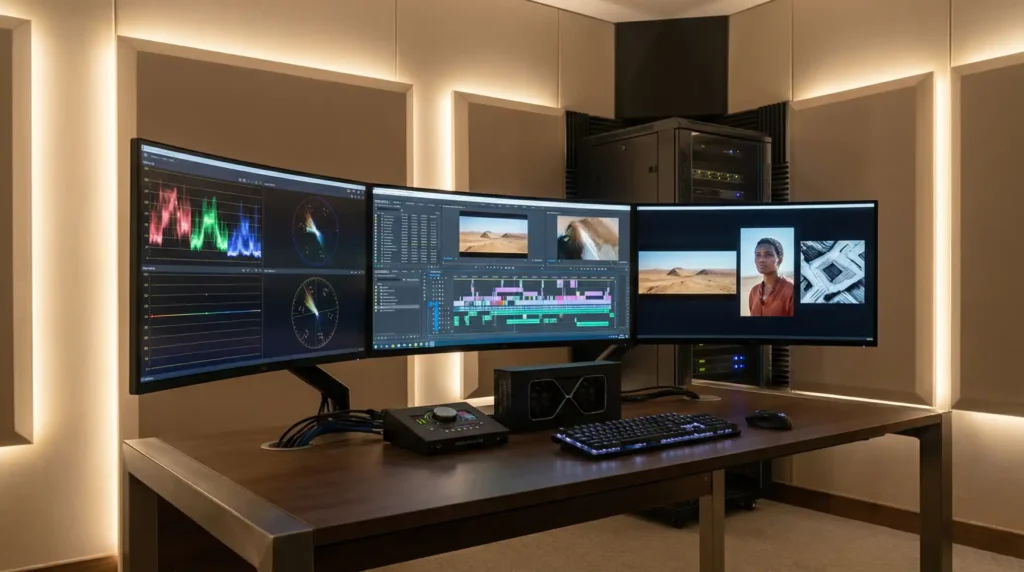 Then comes shoot day, where many brands focus heavily on visuals and forget that professional quality is more than a sharp image. Sound quality, for example, is often the quickest giveaway of whether a production is truly professional. People may tolerate a video that isn’t perfectly cinematic, but they won’t tolerate unclear audio, noise, or inconsistent levels—especially if the content includes interviews, testimonials, or spoken messaging. Lighting consistency matters too, because it makes footage look intentional and premium rather than random or homemade. Beyond technical quality, a good agency runs the set with discipline: time management, clear direction, and constant awareness of what the edit will actually need. This prevents the painful moment when the first edit arrives and you realize the story can’t be built properly because key moments were never captured.
Post-production is where performance is created. Editing isn’t simply assembling clips; it’s where pacing, clarity, and emotional impact are built. This matters even more for social platforms and paid ads, where attention is limited. A strong agency understands that the first seconds matter, that the message must land quickly, and that the structure needs to guide the viewer smoothly. They also know that modern content is rarely a single file. Most brands need multiple versions: a main video, shorter cutdowns for ads, vertical formats for Reels and TikTok, and subtitled versions for silent viewing. When an agency plans for these outputs from the start, your content becomes easier to publish and reuse, and you avoid paying extra later to reformat everything.
At this point, the question becomes how to compare agencies in a way that actually leads to the right decision. The simplest approach is to focus on three things: fit, process, and communication. Fit means the agency’s work matches what you need—not only one impressive project, but consistent results across multiple jobs. Process means they can clearly explain how the project will move from brief to concept to filming to editing to delivery, with milestones that keep everything predictable. Communication means you won’t be chasing updates, collecting feedback across scattered messages, or wondering who is responsible for what. Even extremely talented teams can become exhausting if coordination is messy. Great work feels lighter to manage, not heavier.
Before you sign with any media production agency in Egypt, ask questions that protect your budget and timeline. What exactly are you receiving—how many versions, what durations, what aspect ratios, and what file formats? How many revision rounds are included, and what counts as a revision versus a new request? Who owns the raw footage and project files after delivery? Is the music properly licensed? If the project requires locations or permits, who handles that? These aren’t difficult questions; they’re standard ones. A serious agency will answer them clearly because clarity is part of professionalism.
It’s also worth avoiding common traps. Choosing purely by price is one of the biggest. A low quote can become expensive through delays, limited deliverables, poor planning, or quality issues that force you to redo work. Another trap is choosing an agency because its reel looks cinematic when what you really need is fast, performance-focused content built for short attention spans. A third trap is starting production before your internal stakeholders agree on the direction. If decision-makers change the message mid-project, costs rise and timelines slip quickly. The smoother your internal alignment, the smoother the production will be.
In the end, the Media Production Agencies in Egypt aren’t only the ones that shoot beautiful footage. They’re the ones that understand your goal, plan with discipline, execute with consistency, and deliver content in the formats you actually need—while keeping communication clear and predictable throughout the process. When you choose based on that, production stops feeling like a stressful task and starts feeling like a reliable tool you can use to build your brand and grow.
If you’d like, tell me what you’re producing (social ads, a corporate video, a brand film, event coverage, or a monthly content plan), where you’ll publish it, and your timeline—and I can rewrite this article to match your exact target audience and platform so it fits your website perfectly.
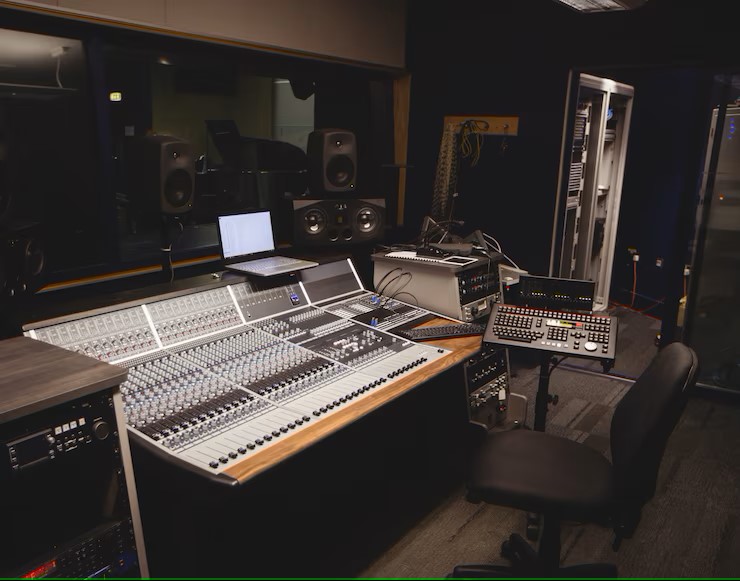
What Full Service Production Studios Really Do
What Full Service Production Studios Really Do
Direct Answer: A full-service production studio provides end-to-end multimedia solutions, managing every stage of content creation—including pre-production planning, professional filming, post-production editing, audio design, and strategic marketing distribution.
Production studios empower partners with comprehensive solutions for their multimedia needs. They handle every part of the creation process and offer a wide range of services to accelerate business growth.
However, production doesn’t stop at filming. Recent 2026 video marketing data shows that 91% of businesses experience a significant positive ROI when utilizing comprehensive video strategies. A true full-service video production partner goes beyond just creating the video; they strategize how to maximize reach and engagement across all digital platforms.
What a Full-Service Production Company Really Does
When businesses need high-quality video content, partnering with a full-service production studio ensures a seamless workflow from concept to final delivery. Unlike standard agencies that handle only specific stages, these companies manage everything—pre-production, filming, post-production, and distribution—so clients don’t have to struggle with multiple vendors.
A top-tier advertising production company combines creative vision, market strategy, and technical expertise to craft compelling visual stories. Their holistic end-to-end approach includes:
1. Pre-Production Planning (Scripting, Storyboarding, Casting)
Pre-production is the crucial stage where ideas take shape. This is where roles are assigned, scenes are sketched, settings are imagined, scripts are polished, locations are scouted, and the right cast and crew are assembled.
Key Steps in Pre-Production:
- Finalizing the Script: The screenplay is the project's blueprint, locking in dialogue, scenes, and pacing.
- Budgeting & Financing: Accounting for every cost detail, from actor fees to catering.
- Assembling the Crew: Hiring key department heads like cinematographers and production designers to execute the director's vision.
- Storyboarding & Visual Planning: Creating sketches and shot lists to align style and composition.
- Location Scouting & Set Design: Finding or building the perfect backdrop essential for audience immersion.
- Casting & Contracts: Conducting auditions to find the perfect talent and securing legal permits or rights.
- Scheduling & Logistics: Creating a detailed shooting schedule to factor in availability and potential delays.
2. Professional Filming (Cinematography, Lighting, Directing)
The production stage—often called principal photography—is where months of planning finally come to life. This is the phase where actors step into character, cameras roll, and the visual vision transforms into reality. Every department works in tight synchronization:
- Cinematographer (DP): Leads the camera and lighting teams to create the film’s distinctive visual style.
- Director: Guides creative performances and ensures the core vision stays on track.
- 1st Assistant Director (1st AD): Keeps the shoot running on schedule and coordinates between departments.
- Grip & Electric: Handles complex lighting rigs, camera support, and technical setups.
- Sound Department: Captures crisp, clean dialogue and ambient noise on set.
- Art Department: Maintains sets, props, and costumes for visual continuity.
- Script Supervisor: Tracks every single take, ensuring no continuity details are missed.
3. Post-Production Studios (Editing, Color Grading, VFX)
Once filming wraps, the post-production phase transforms raw footage into a polished masterpiece. This crucial phase includes:
- Picture editing and assembly.
- Color grading (supervised by the DP to lock in the mood).
- Visual effects (VFX) integration.
- Sound design and multi-track mixing in dedicated audio production environments.
- Original music composition and cinematic scoring.
4. Audio Production Studio Services
A premium studio combines cutting-edge audio technology with creative expertise to craft immersive, cinematic experiences that meet the highest industry standards.
- Custom Casting for Authentic Voices: Connecting your project with the perfect voice talent for documentaries, animation, or persuasive commercials.
- Precision Recording: Utilizing production sound mixing for seamless on-set recording, and professional voiceover/ADR sessions in acoustically treated studios.
- Advanced Audio Post-Production: Dialogue editing, noise cleanup, and tailored sound design/Foley to create rich environments.
- Original Music & Mastering: Custom music composition and audio mastering in stereo and surround formats for films, games, and commercials.
5. Strategic Marketing & Distribution
A true production partner doesn’t stop at file delivery; they ensure your content performs effectively in the marketplace by offering:
- Platform Optimization: Tailoring formats for YouTube, Instagram, TikTok, LinkedIn, or TV.
- SEO & Metadata Tagging: Maximizing discoverability for search engines and AI recommendation algorithms.
- Performance Analytics: Tracking engagement data to continuously refine future campaigns.
Why Choose a Full-Service Production Studio?
By handling every single step under one roof, a full-service studio delivers highly consistent, high-impact videos that resonate with your target audience—completely eliminating the stress, miscommunication, and extra costs of managing multiple vendors.
If you are looking for a reliable partner that does it all with expert precision, a full-service production studio is your key to creating standout content.
Contact Us at Sound & Sight today to elevate your brand's visual storytelling.
Frequently Asked Questions (FAQ)
1. What is the difference between a video agency and a full-service production studio?
Standard agencies often outsource parts of the project, such as filming or audio post-production, which can lead to higher costs and fragmented communication. A full-service production studio handles everything internally from the initial scriptwriting to the final video editing and marketing distribution.
2. Why is audio production just as important as video quality?
Market studies show that poor audio quality reduces video watch time by up to 70%. Professional sound design, crystal-clear voiceovers, and premium audio mixing ensure that the video feels immersive and retains viewer attention.
3. Can a full-service studio repurpose one video for multiple platforms?
Yes. Part of the strategic distribution phase involves optimizing the core content into different aspect ratios, shorter teasers, and customized formats suitable for YouTube, TikTok, TV commercials, and social media platforms.